More work · Computation & robotic fabrication
Stone Aggregation
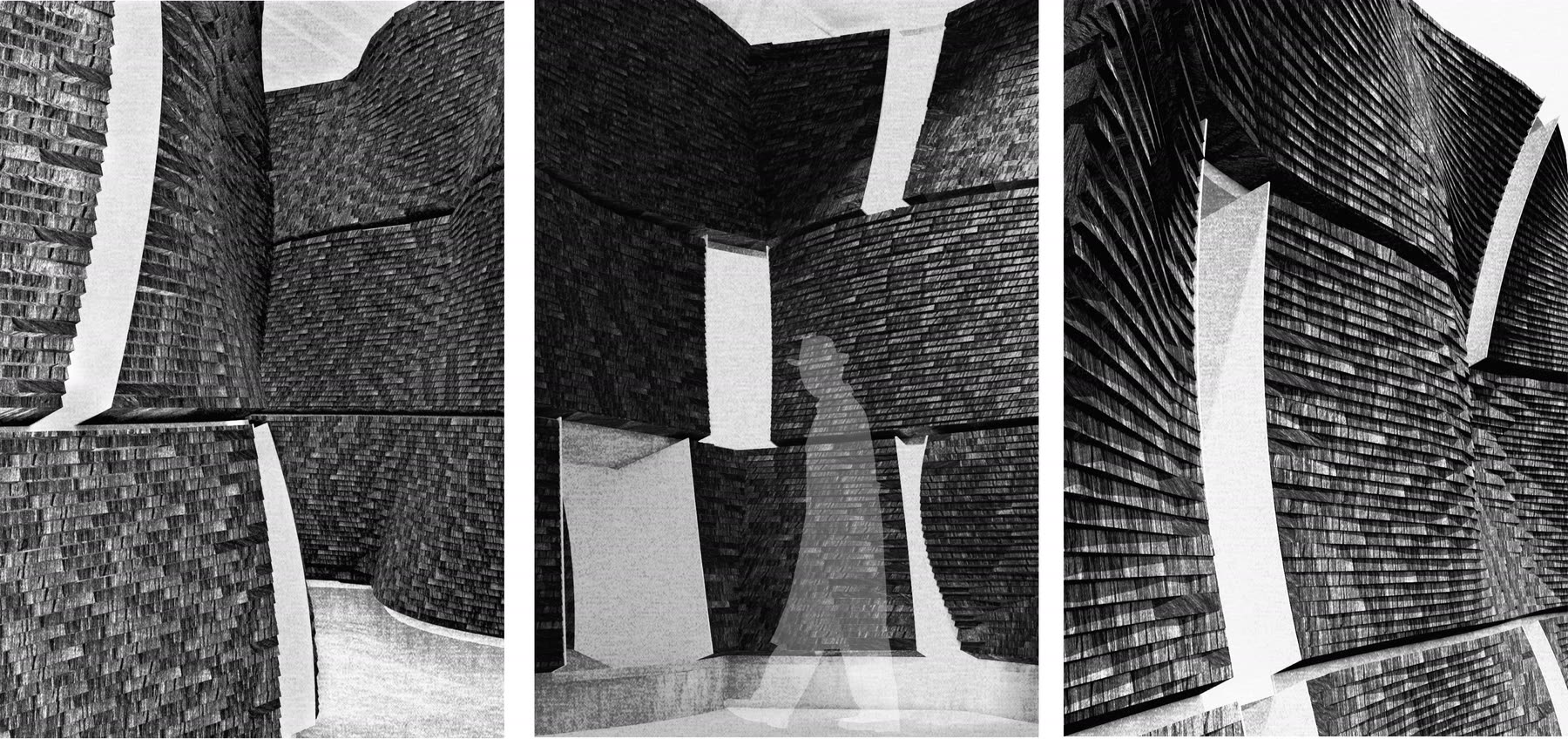
A robot that builds a dry stone wall the way a mason does — by looking at what is there and picking the stone that fits.
Year
2022 · M.Arch, CMU
Type
Academic · individual
Keywords
Dry stone wall · post-tension · hybrid fabrication
Tools
Scanning · selection algorithm · robot arm · Grasshopper
01 · Description
Every stone is different, and a dry stone wall only stands if each one fits its neighbours.
Dry stone walls are built without cement or mortar, so stability comes entirely from how well the stones sit together. A mason chooses each stone by eye — slow, skilled work where one poor fit weakens the wall.
This project asks whether computation and a robot can take on that selection: speeding up a labour-intensive craft while exploring what it can do for openness, structure, form and scale.
02 · Tectonic methodology
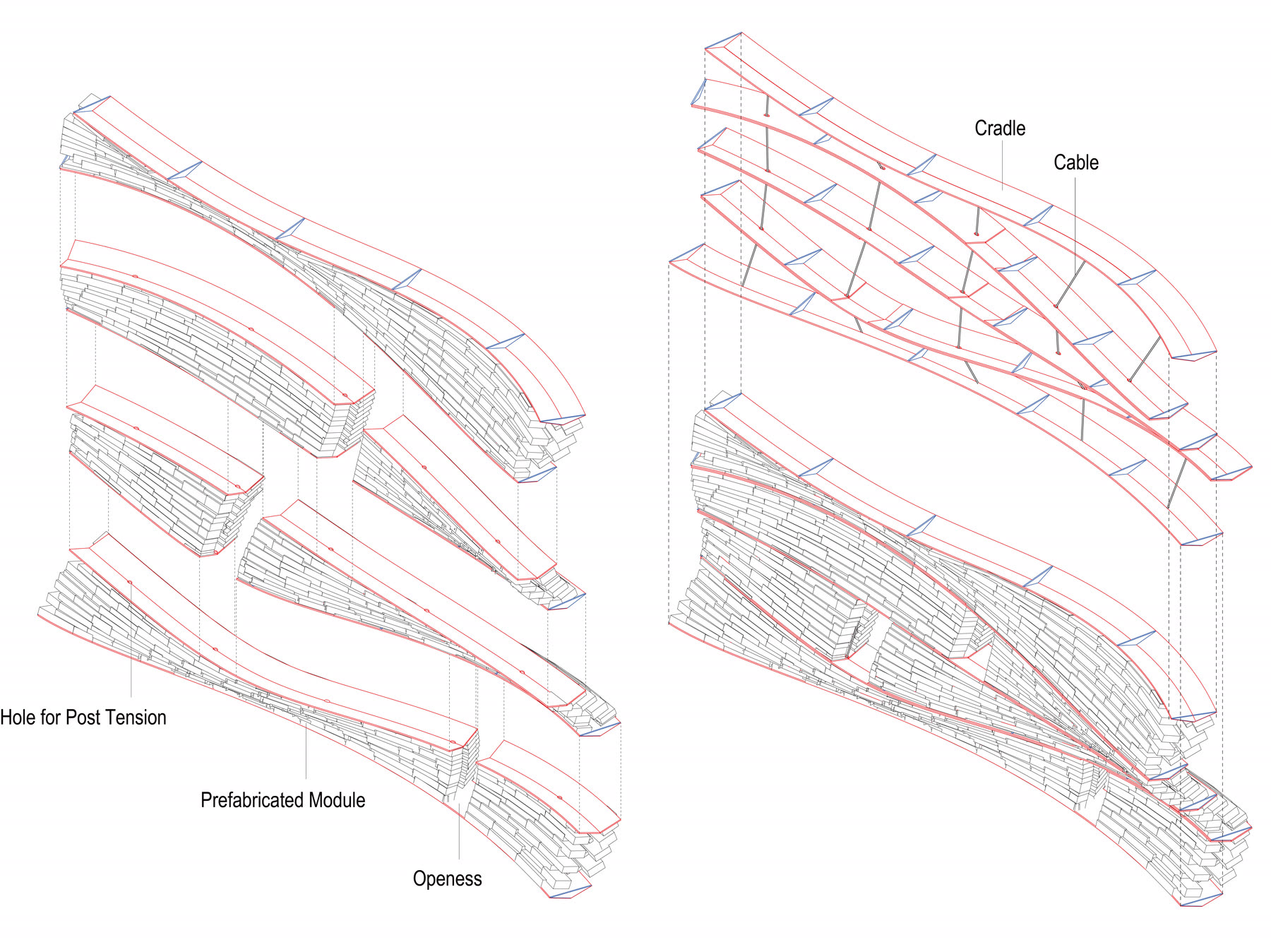
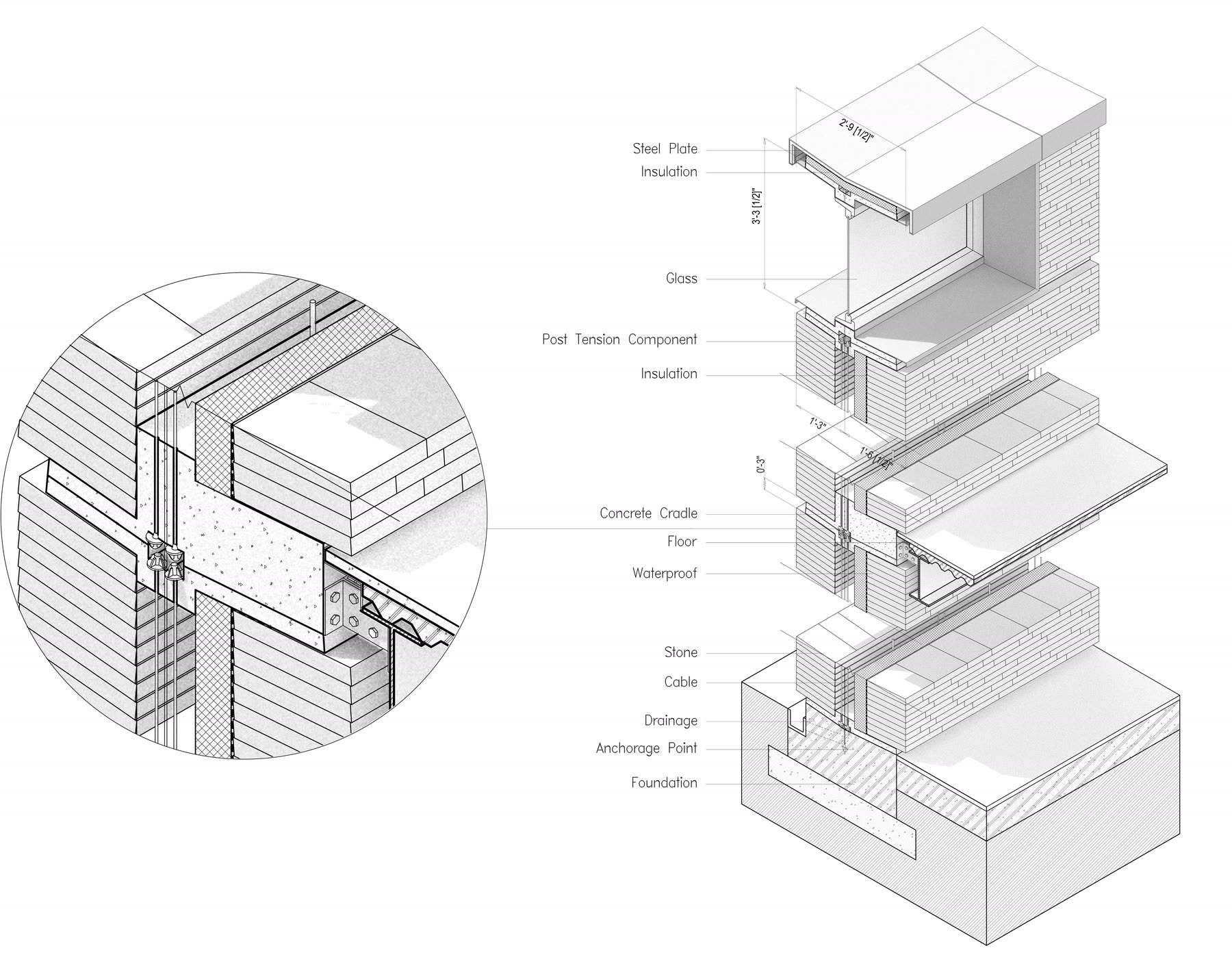
The material is shale, a common Taiwanese stone: plate-shaped, rough-textured and strong. Stones sit in V-shaped cradles, and post-tensioning cables tighten the cradles so the stones are held in compression.
The wall is made of prefabricated modules. On site, the modules are stacked and post-tensioned together, then tied down to the foundation.
03 · Structural analysis
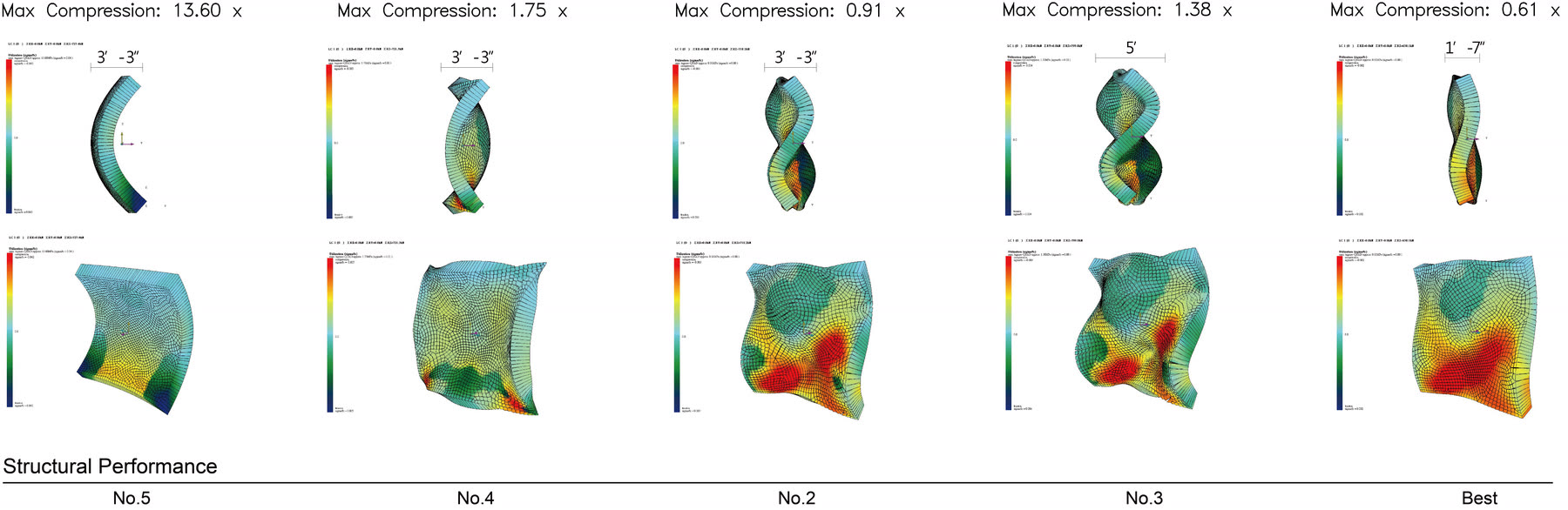
Wall shapes were compared for structural performance, then detailed down to the cradle, cable and foundation — and planned as a sequence a robot can actually build.
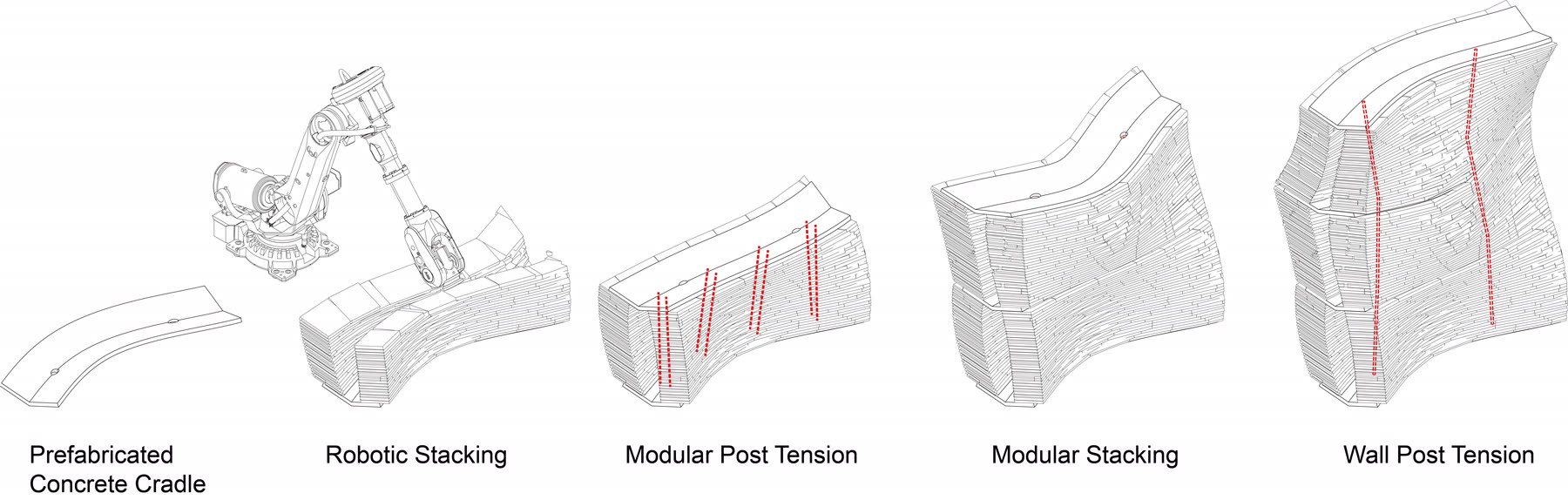
04 · Hybrid fabrication
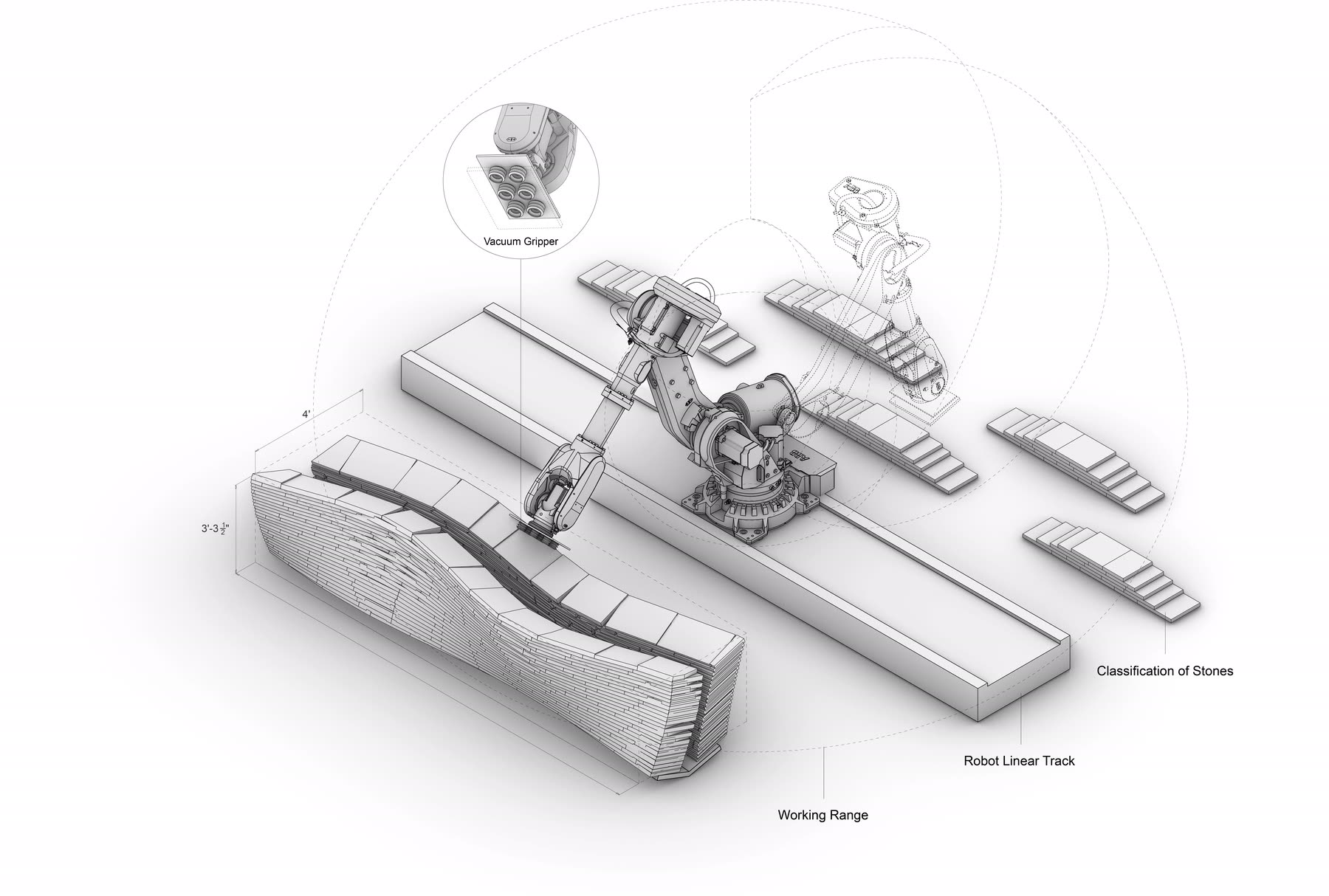
Scan, choose, place, rescan — the wall is re-read after every stone.
A sensor captures the wall as it grows. That data maps each stone’s outline and defines the shape of the next gap. A selection algorithm compares the scanned stones against that target, and the robot picks and stacks the closest fit.
The aim is a balance between randomness and control — keeping the natural variety of the stone while removing guesswork. Because material, machine and design stay in sync through real-time feedback, the process reduces errors, improves efficiency and treats natural material as a resource rather than a problem.
Be the algorithm — which stone fits?
Illustrative demo
{{fitLabel}}
{{fitNote}}
while wall.incomplete():
    scan  = sensor.capture(wall)          # geometry, in real time
    gap   = analyse(scan).next_target()   # stone outlines → next shape
    stone = best_match(inventory, gap)    # compare scanned stones to target
    robot.place(stone, gap.pose)
    inventory.remove(stone)               # then rescan and repeat
Next project
Sand Drawing →