More work · Parametric design & digital fabrication
Bamboo Weaving
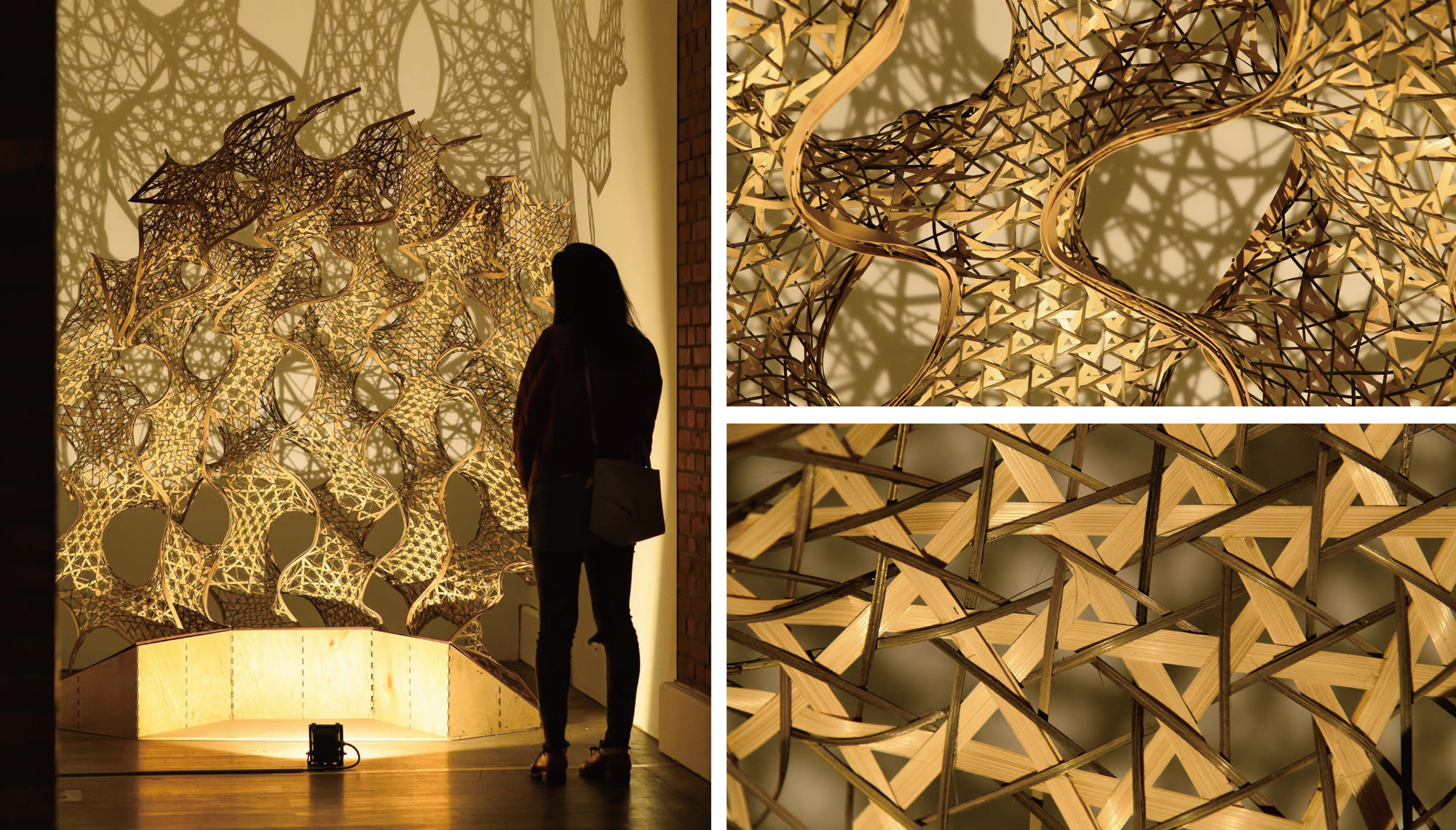
A traditional hexagon weave, driven by parametric design, lifted from a flat pattern into a freestanding 3D structure.
Year
2018 · B.Arch
Type
Academic · individual
Keywords
Hexagon weaving · digital fabrication · parametric design
Tools
Rhino · Grasshopper · structural simulation · CNC-milled moulds
01 · Description
Split bamboo into strips, weave them in hexagons, and a flat sheet becomes a structure.
Bamboo poles are cut into thin strips that can follow free-form curves. Woven in a hexagon pattern, the strips lock into each other and gain stability in several directions at once.
The weave behaves like a space frame. Curved, it resists load well enough to act as a building’s main structure — and its openings shape how light and space are experienced inside.
02 · Prototype
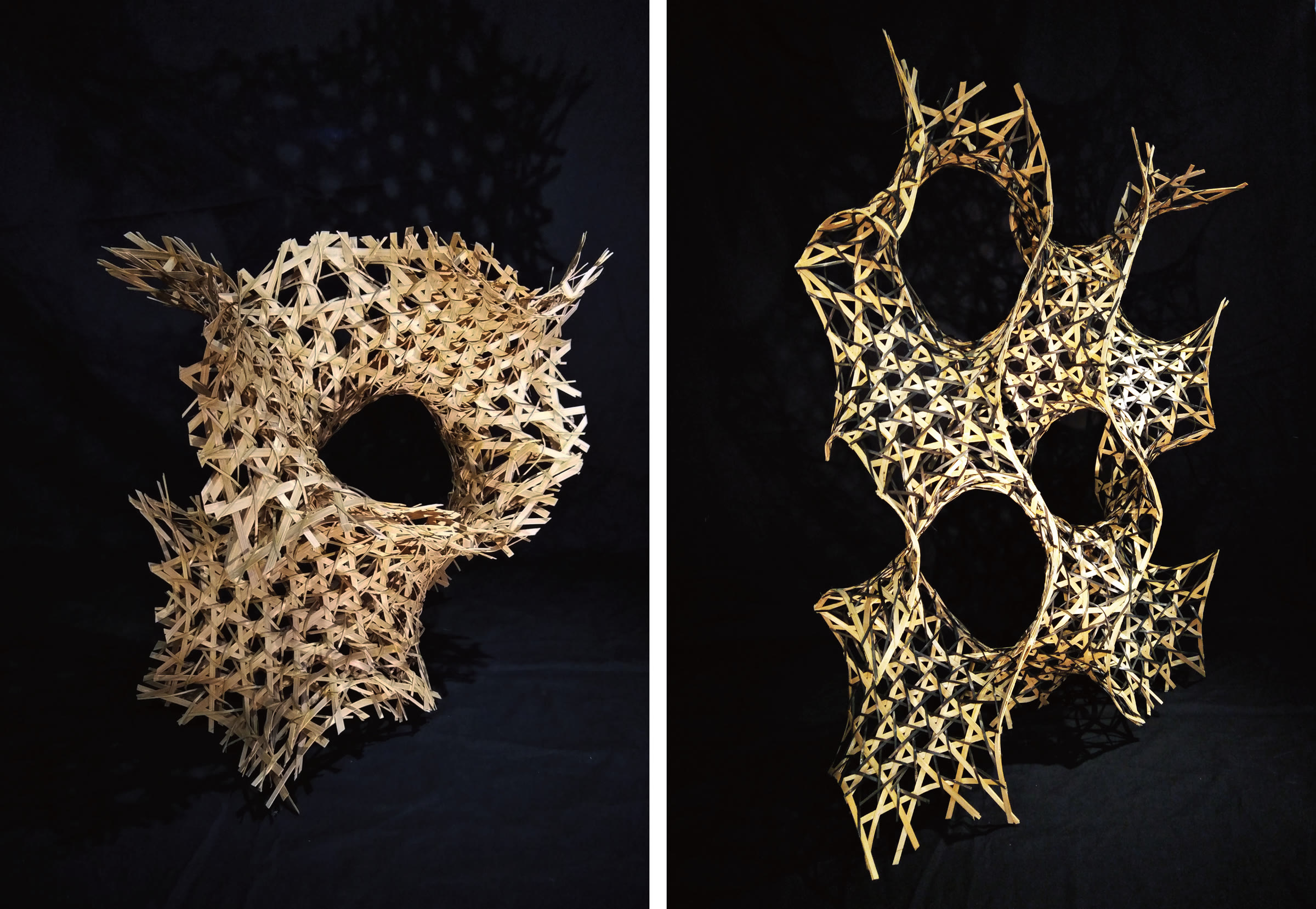
The prototype combines the hexagon weave with a gyroid surface to test structural strength. Bamboo laminated along the gyroid’s edges takes the stress and tension.
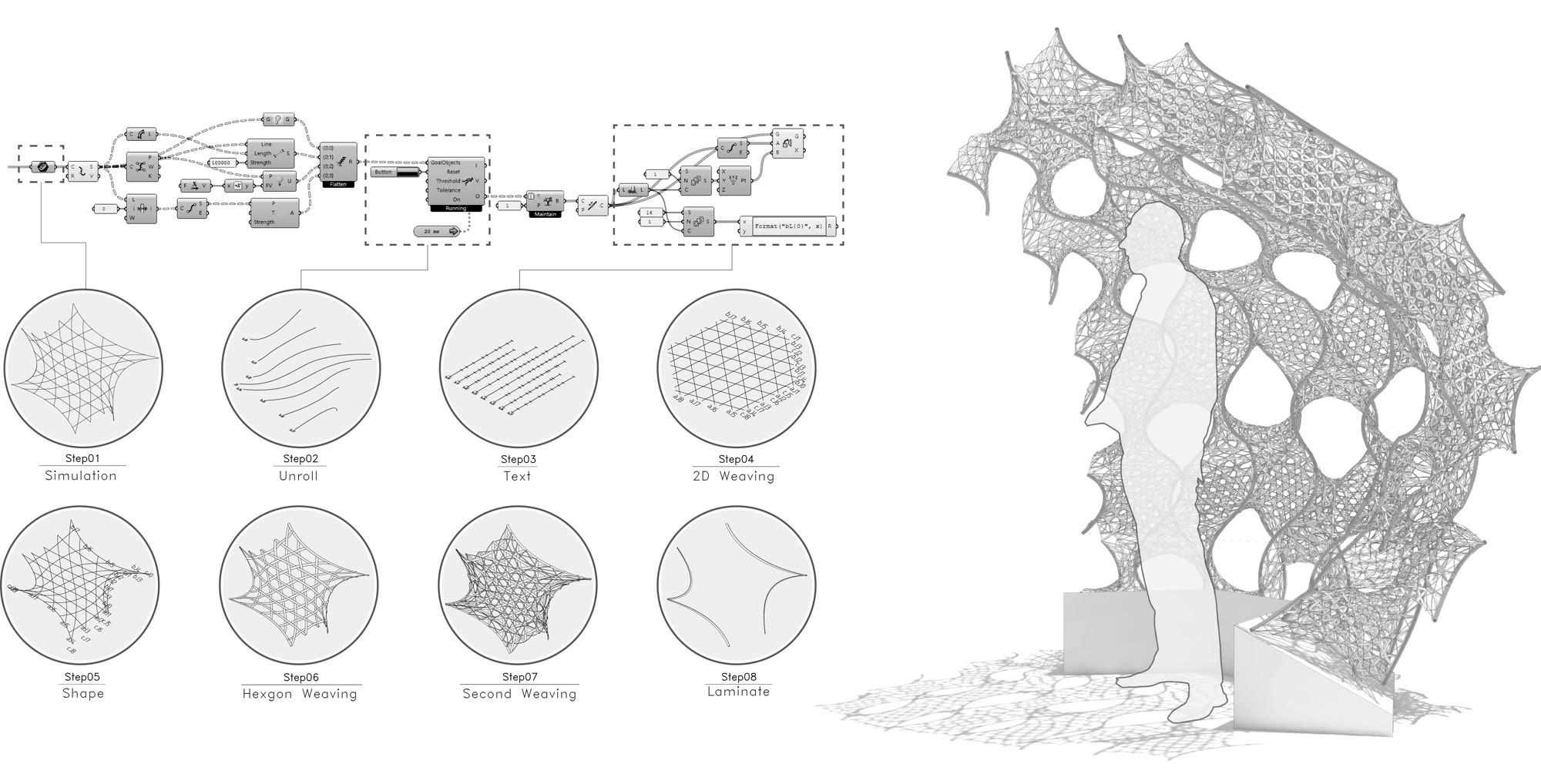
CNC-milled moulds shape the weave, and two overlapping layers of weaving cancel out each other’s distortion. A rectangular grid divides the surface into hexagonal units, and custom joints fix the strips at set angles.
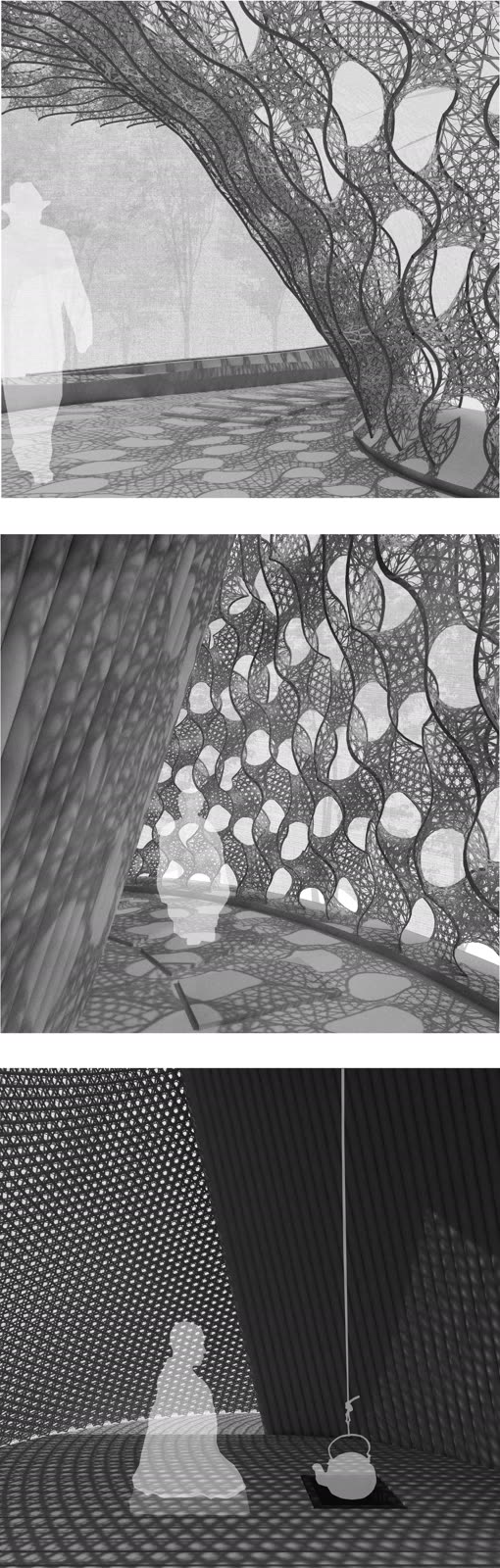
Each unit varies in scale, density and subdivision — so the parameters control how much outside light reaches the interior.
03 · Tea house
Design the form; let the material write the texture.
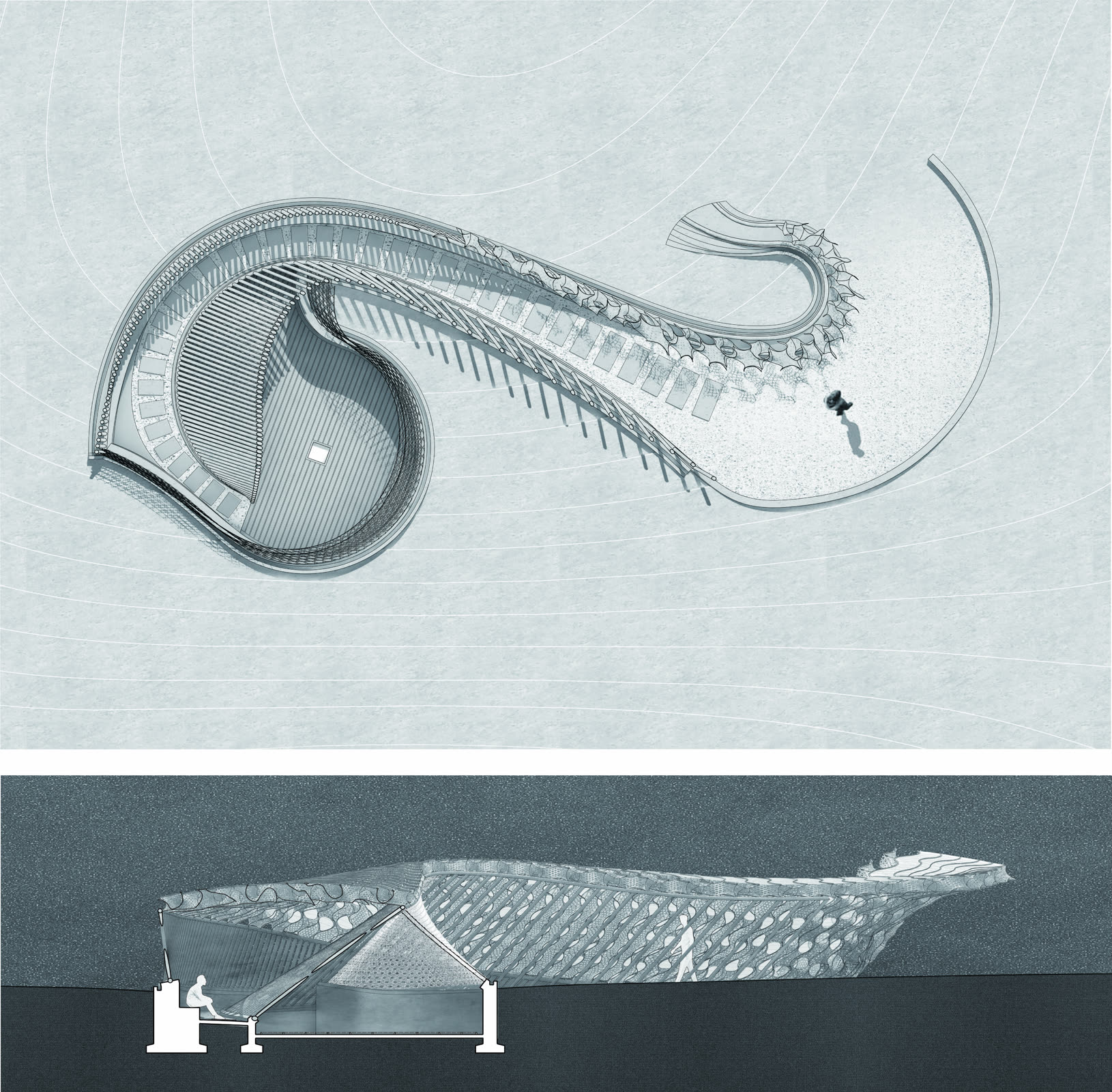
Natural bamboo is irregular, so the result can never be fully simulated. The designer controls the overall form, while the material’s own variations shape the surface — close to the Japanese idea of wabi-sabi, the beauty of imperfection.
04 · Film
From simulation to weave: the full process in three minutes. Sound on.
05 · Detail
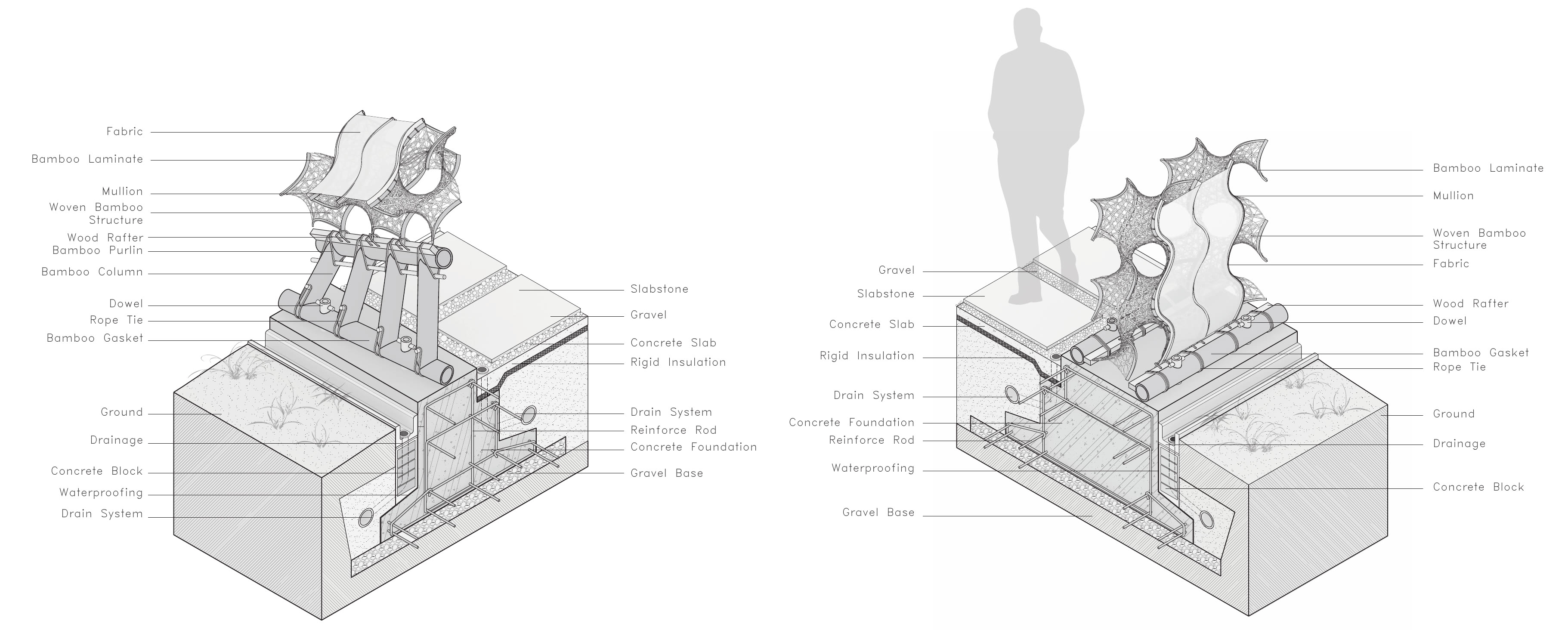
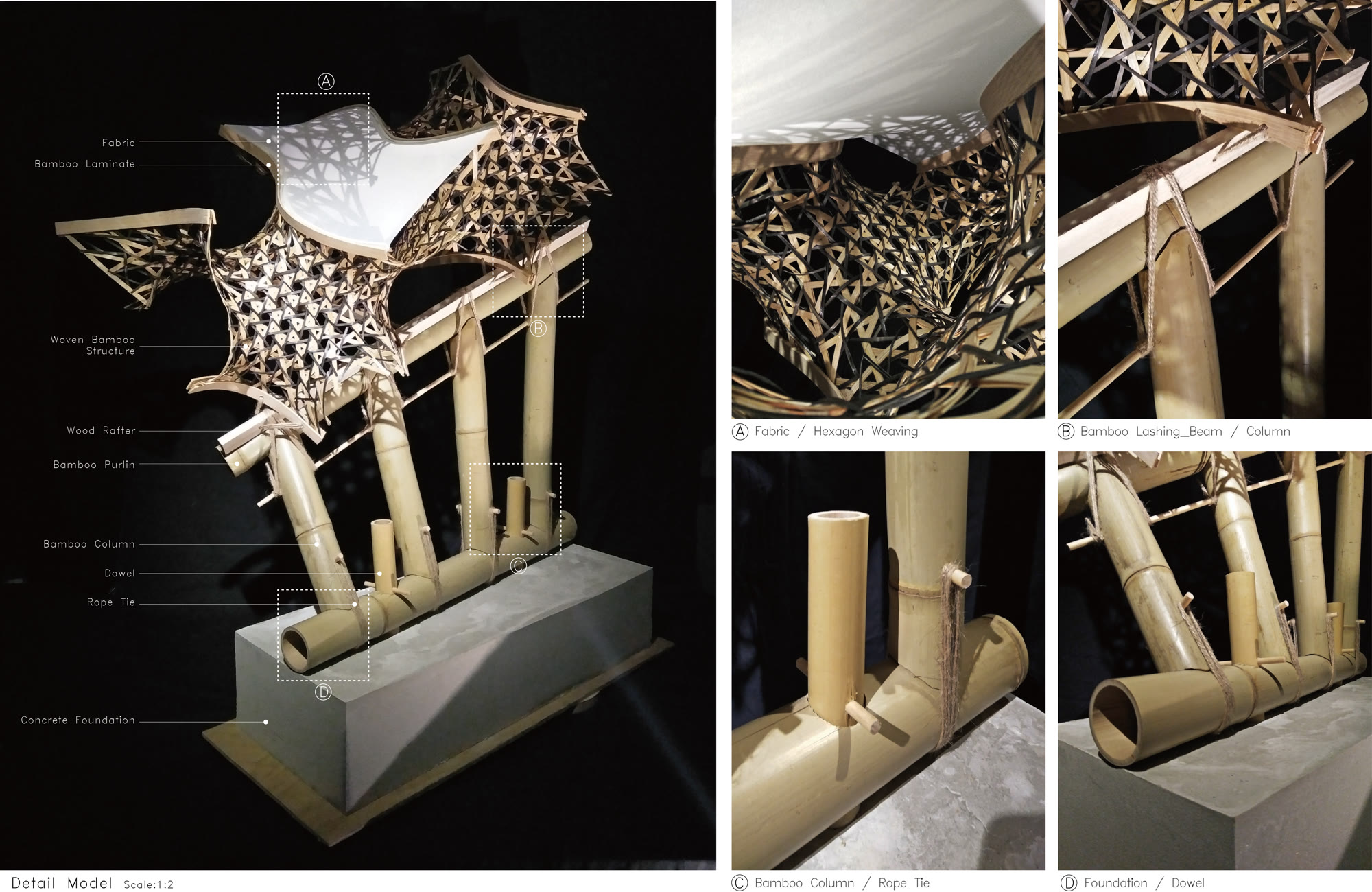
The joints between single-layer weave, double-layer weave and bamboo poles are lashed with rope, so nothing has to be drilled into the bamboo. A semi-transparent fabric covers the structure, held in place by laminated strips. Below it, the details run all the way down to the foundation and drainage.
06 · Fabrication
A large-scale model of the first segment of an expandable tea house. Computational simulation guided the woven structure from shape to unrolled strips, and stacking and overlapping layers strengthened the freestanding curves.
Next project
Stone Aggregation →